
What is Security by Design
Security by Design is a proven method to develop products that are less vulnerable for cyber security threats.
Secure by Design means that technology products—such as software and hardware—are built in a way that reasonably protects against malicious cyber actors gaining unauthorised access to devices, data, and connected infrastructure.
Secure by Design also applies when designing services. It makes your service secure by default. Most services are supported by software products.
Cybersecurity should be the highest priority during new product development for several compelling reasons:
Threats continue to rise – The frequency and sophistication of cyber attacks are increasing.
Customers demand risk-free products – Users are now more aware of digital threats and expect robust, built-in security.
Liability exposure – You may be held legally and financially accountable when severe security flaws emerge in your products.
Security by Design is not a product. Nor a simple straight through process. Security by Design can be viewed as a core philosophy to do the right things from a cyber security perspective in every action performed when developing and producing a new product.
Cyber security is a key quality aspect that can not be integrated later within your product. You can not create a better security foundation when your product is finished. Security is a core product property that is almost impossible to add later.
The term Security by Design can be understood in different ways.
In a more narrow sense Security by Design means considering security as early as the design phase of the software development process. In a broader sense Security by Design can be understood as a core framework to make sure cyber security is on top of mind in every step of your development process. So within the broad development process when developing a new product.
Security should be seen as a foundation that is developed in parallel with your new product. A good security foundation can not be designed in isolation from product development.
Why
You can not create a better security foundation when your product is finished. Security is a core product property that is almost impossible to add later.
Practising Security by Design is essential to create systems and business processes that are resilient against cyber security threats.
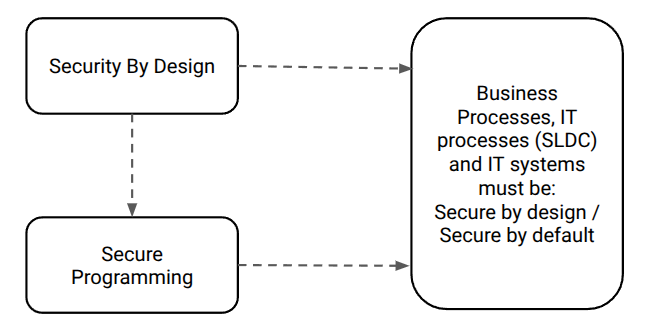
The diagram highlights a simple yet critical relationship. Security by Design operates at the strategic level, shaping how organisations approach risk, architecture, and decision-making across business processes and IT systems. It ensures that security is embedded from the outset—secure by design and secure by default—rather than introduced later as an afterthought.
Secure programming complements this by translating these principles into practice at the development level. It focuses on how software is designed and written, ensuring that applications are robust and resistant to common vulnerabilities and attack vectors.
Together, these disciplines reinforce one another. Security by Design provides the direction; secure programming delivers it in real systems. The outcome is a coherent approach in which business processes, SDLC practices, and IT systems are consistently aligned and inherently secure.
The relationship in practice
Security by Design – Strategic and architectural level Security by Design defines the organisation’s overarching approach to risk, architecture, and procurement. It embeds security considerations into business processes and IT landscapes from the earliest stages. By adopting the principles of “secure by design” and “secure by default”, organisations move away from reactive, bolt-on security measures, which are often costly and less effective.
Secure Programming – Tactical implementation Secure programming brings these principles to life within the Software Development Life Cycle (SDLC). It ensures that applications are developed with security in mind, reducing exposure to common vulnerabilities such as those outlined in the OWASP Top 10, and making systems more resistant to exploitation.
Importantly, even organisations that do not develop software in-house must understand secure programming. Security requirements still need to be clearly defined and enforced in contracts, such as service level agreements, with third-party suppliers responsible for building or managing software.
Security by Design and Secure Programming—whether internal or outsourced—must be closely aligned. A systems-based approach ensures that the entire organisation remains secure by design and secure by default.
Security by Design is a proven method to develop products that are less vulnerable for cyber security threats.
Consumers should have risk free products and are nowadays far more aware of digital threats. You are liable when severe security problems arise in your products.
Security by Design is not a product. Nor a simple straight through process. Security by Design is a systems approach to do the right things from a cybersecurity perspective in every action performed when developing and producing a new product. So it is holistic, integral and embraces key principles of sytems thinking methods.
What to protect?
The essence of information security is simple: protect information. That is it. So whenever possible, do not make it more complicated than needed.
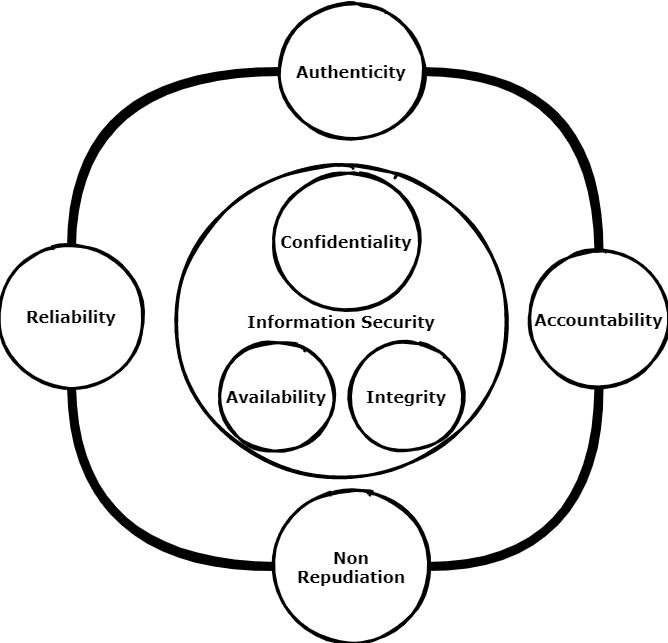
Security by Design helps you protect your valuable assets – from initial design through to ongoing monitoring. It is based on a holistic approach with its roots in systems science.
The perfect and single solution
No single cybersecurity solution can eliminate the persistent threat of malicious cyber actors exploiting technology vulnerabilities. Even products designed to be “secure by design” may still experience vulnerabilities. However, a large proportion of these vulnerabilities stem from a relatively small subset of root causes and can be mitigated.
Awareness! → Principles → Reuse proven solutions
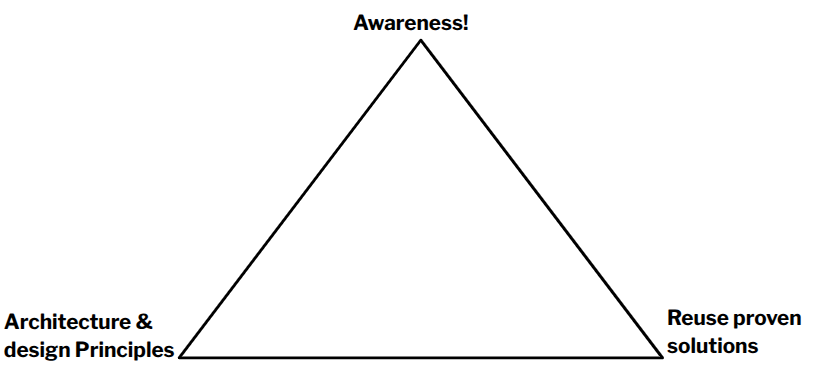
Awareness – The foundation. Without knowing security risks exist, nothing else matters.
Architecture & Design Principles – The rules that guide decisions (e.g., least privilege, defence in depth).
Reuse proven solutions – The action. Don’t invent your own crypto or auth – use battle‑tested standards (TLS, OAuth2, etc.).
The chain breaks if any link is missing. No awareness → no principles applied. No principles → no meaningful reuse. No reuse → avoidable vulnerabilities.
Security by Design Elements
Security by Design consists of various aspects:
Prevention
Security Monitoring
Security Policies
Protection
Risk Assessments
SDLC
Security Architecture
Security Principles
Security Training
Security Management
Security Culture
FOSS Security